Nepheline
Nepheline is a widespread mineral from the 'silicates and germanates' class. Additionally, it is part of the sodalite group, which falls under the large category of feldspathoids.
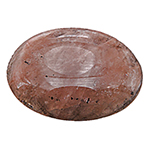
Nepheline from Nephton, Ontario, Canada (Craig Pit; American Nepheline Co. Mine)
Origin of name: The first description was provided in 1801 by René-Just Haüy, who named the mineral after the Greek word νεφέλη (nephele), meaning "cloud," due to the cloudy turbidity that occurs when the mineral is decomposed by acids.
Synonyms and trade Names: Eleolite or Fatstone. The term Eleolite was coined by the German chemist Martin Heinrich Klaproth (1743–1817), who had a profound passion for mineral analysis. The name is derived from the Greek words έλαιο (eleo) for "oil" and λίθος (lithos) for "stone."
Can be confused with: Nepheline can be confused with many other minerals. It is most commonly mistaken for feldspars, with which it often occurs, but also for jade minerals (nephrite and jadeite), members of the serpentine group (such as bowenite), as well as quartz, apatite, and many others.
Localities: Nepheline is a rock-forming mineral found in over 1,500 deposits across all continents, including Antarctica. The type locality is Monte Somma, a roughly 4 km long arcuate ridge of the Somma-Vesuvius volcanic complex east of Naples in the Campania region on the west coast of Italy. The most significant deposits are located in Russia (Kola Peninsula), Norway, Canada, and Brazil.
In Germany, there are more than 100 known locations, including the Black Forest, Upper Franconia, the Eifel, and the Thuringian Forest.
In Austria, notable occurrences include Pauliberg in Burgenland, as well as sites in Styria, such as Bad Gleichenberg, the Klöch basalt quarry, and Mühldorf near Feldbach.
Handling: Nepheline is relatively soft, highly heat-sensitive, and extremely sensitive to acids. Do not use ultrasonic cleaners or electroplating (galvanics). The stone must be unmounted before any soldering work!
Worth knowing: As a gemstone, nepheline plays—to put it mildly—a minor role due to its sensitivity and the rarity of truly attractive specimens. In industry, however, nepheline is a true heavyweight. The primary consumers are the glass, ceramics, aluminum, and fertilizer industries.
Shop for Nepheline
 Deutsch