Cornelian
Carnelian is a variety of chalcedony and belongs to the quartz family. Its characteristic orange to reddish-brown coloration is caused by iron oxide inclusions.
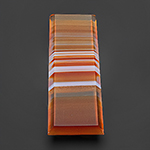
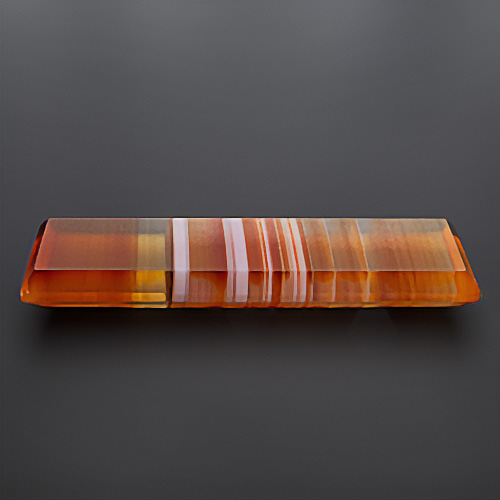
A particularly attractive specimen of banded carnelian
Origin of name: The name carnelian is likely derived from the Latin word cornum (cornelian cherry), though it may also originate from carneolus, meaning "flesh-colored."
Can be confused with: Carnelian can be confused with several other stones, including Sarder (also called Sardonyx), Fire Opal, Orange Calcite, Aragonite, Hessonite and Spessartine Garnet e.a.
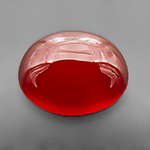
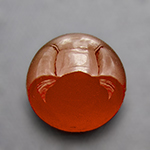
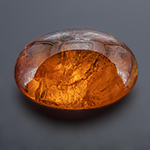
Two Cornelians and a Spessartine Garnet (Nigeria)
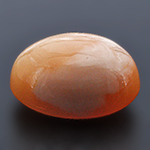
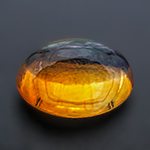
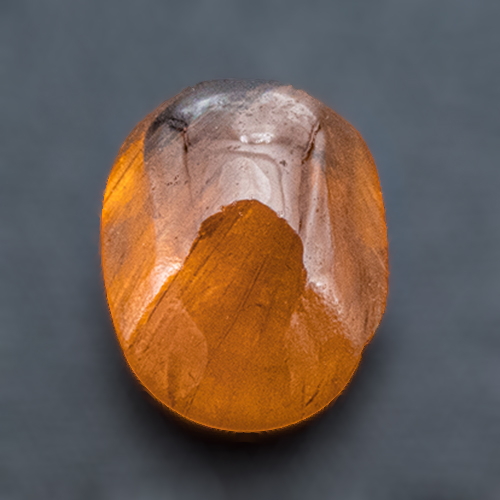
Two Fire Opals (Mexico) and a Mandarin Garnet (Kunene, Namibia)
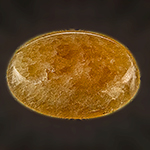
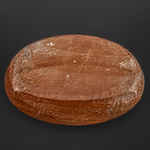
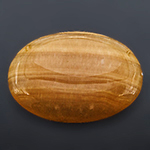
Two Calcites (Mexico) and a Aragonite (Rössing, Namibia)
Localities: Carnelian is found worldwide, on every continent except Antarctica. As of April 2026, the mineral database Mindat.org lists a total of 136 documented localities.
Handling: Carnelian is only attacked by hydrofluoric acid. It should be kept away from electroplating baths. Otherwise, carnelian is easy and uncomplicated to work with.
Worth knowing: The history of carnelian is, essentially, the history of human civilization itself. Hardly any other stone has been used so consistently as a gemstone and seal stone over so many millennia.
Prehistory and Early Cultures
Neolithic Period (approx. 4,000–5,000 BCE): Humans first began working with carnelian during this era.
Varna Culture (Bulgaria): Some of the world's oldest carnelian beads, already meticulously polished, were discovered in the Varna necropolis.
Indus Valley Civilization (modern-day Pakistan/India): The craftsmen of Mehrgarh and Lothal were true masters. They were already proficient in heat treatment to enhance color, as well as grinding and even drilling for necklaces. Carnelian from this region was a highly sought-after export as far as Mesopotamia.
Ancient Egypt
The Egyptians used carnelian for amulets, signet rings, and jewelry, as evidenced by numerous grave goods. In Tutankhamun's tomb, daggers were found with carnelian-set handles, alongside rings, bracelets, and earrings.
According to the Egyptian Book of the Dead, carnelian amulets (often in the shape of the Knot of Isis) were intended to protect the deceased from the dangers of the underworld.
Antiquity: Greece and Rome
In Greece, and especially in the Roman Empire, the use of carnelian reached a practical peak:
Intaglios: Numerous surviving examples feature deeply carved images of mostly gods, emperors, and female figures.
Seal Stones: Carnelian became the standard for seals. Unlike stones like lapis lazuli, sealing wax hardly sticks to carnelian—especially when moistened by breathing on it—and the wax does not discolor the stone.
 Deutsch