The Helmet
Origins: Protection and Status in the Middle Ages
In the Early Middle Ages (up to approx. 1050), the most common type of helmet was the Spangenhelm [the name Spangenhelm is of German origin. Spangen refers to the metal straps that form the framework for the helmet and could be translated as braces, and helm simply means helmet]. It consisted of several metal plates held together by iron straps and protected the head from blows and stabs, while the face often remained exposed.
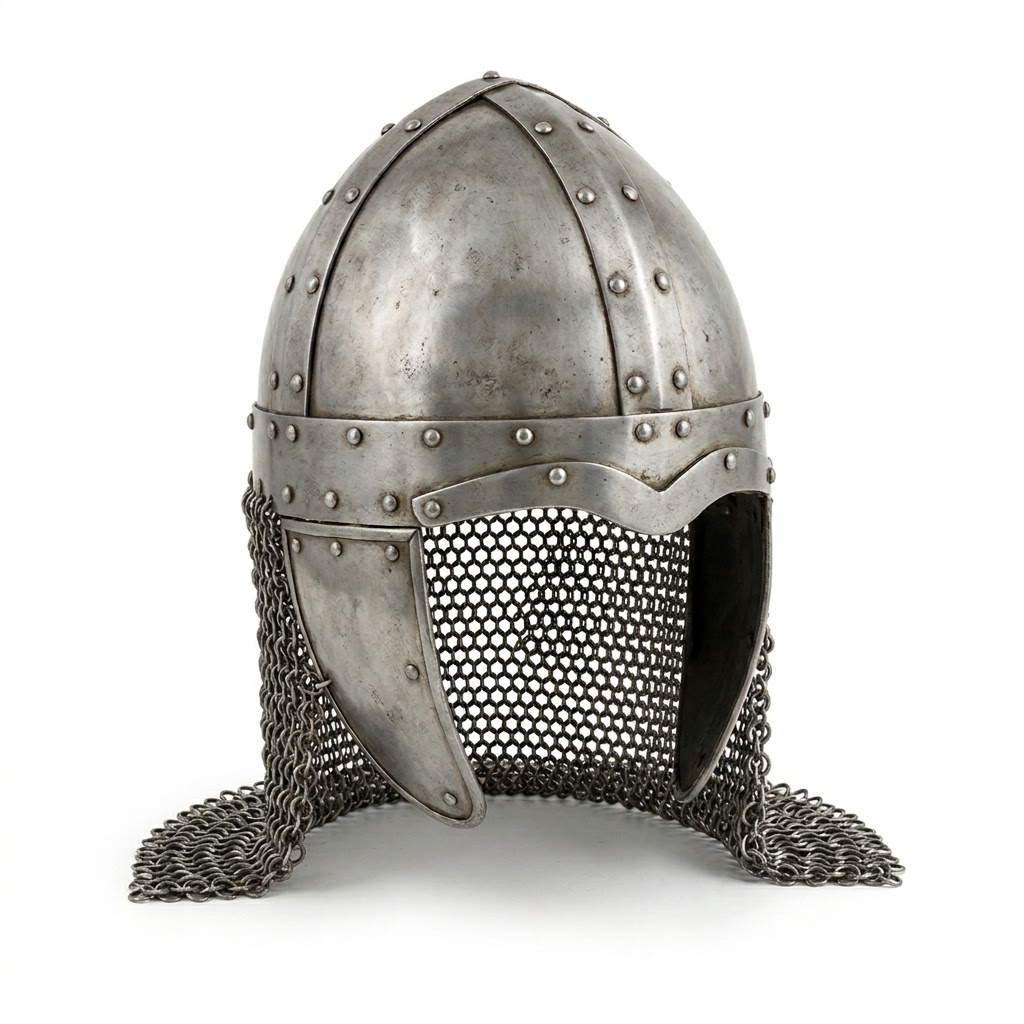
Spangenhelm with a so-called aventail (camail), a mesh of chainmail.
Later, the Nasal Helm with its characteristic nose piece became dominant. It offered slightly more protection but kept the face open, which allowed for better vision and communication.
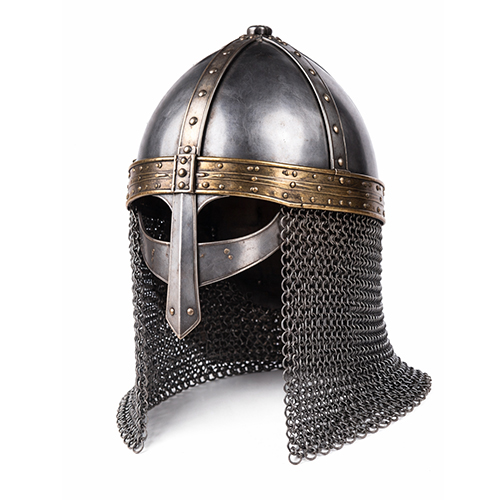
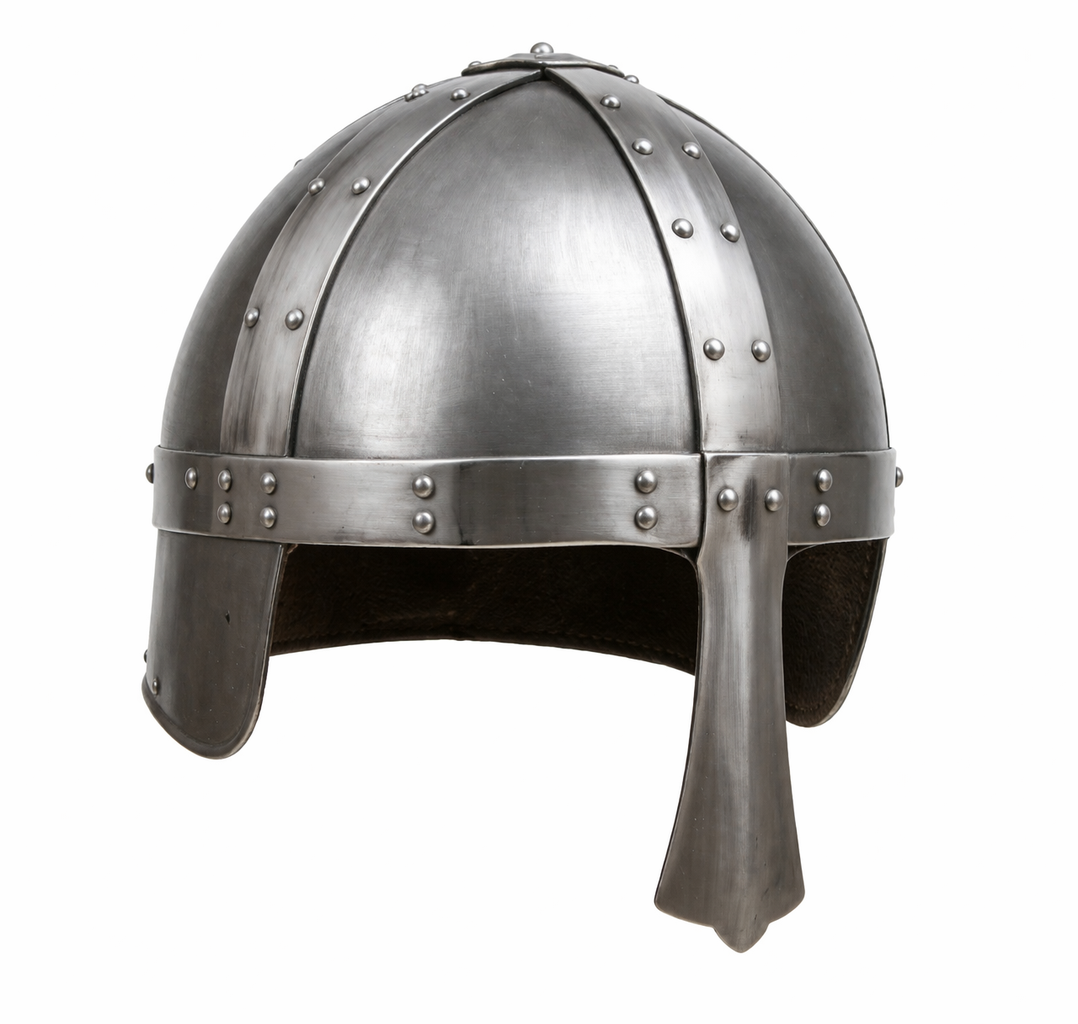
Nasal helmet, with and without aventail
In the High Middle Ages (11th–13th century), warfare changed radically. Lance charges by heavy cavalry required more massive protection, leading to the quintessential knightly helmet: the Great Helm (also known as the bucket or pot helm). This is the iconic helmet of the Crusaders. It enclosed the entire head and often rested on the shoulders.
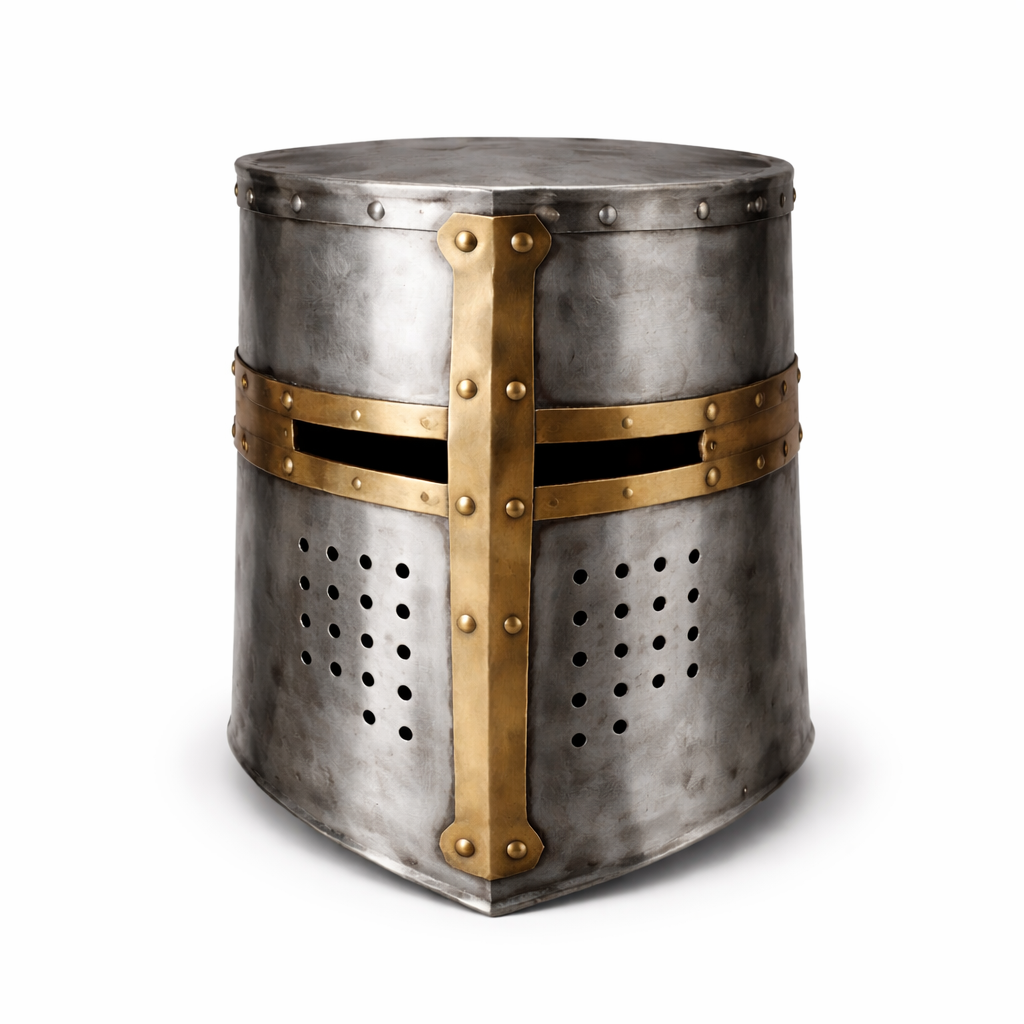
Great Helm (Bucket or Pot Helm)
A cultural impact of the Great Helm, which completely concealed the face, was that knights began wearing coats of arms on their shields and crests (ornaments made of wood or leather) to remain recognizable in the heat of battle. This gave rise to heraldry.
Golden Age: Form Follows Function (and Fashion)
In the Late Middle Ages (14th and 15th century), helmet design evolved rapidly:
The Bascinet evolved from the cervelliere (secret helmet), a light skullcap worn by horsemen in the 13th century beneath the Great Helm, paired with a padded cap and a chainmail hood. From the 14th century onwards, the mail aventail was increasingly attached directly to the skullcap. This cap grew larger and was eventually used without the heavy Great Helm previously worn over it. The bowl was forged into a pointed shape to better deflect overhead blows, and the edges extended downward until the bascinet enclosed the entire head except for the face.
To protect the face, a nasal piece or a hinged visor could be attached.
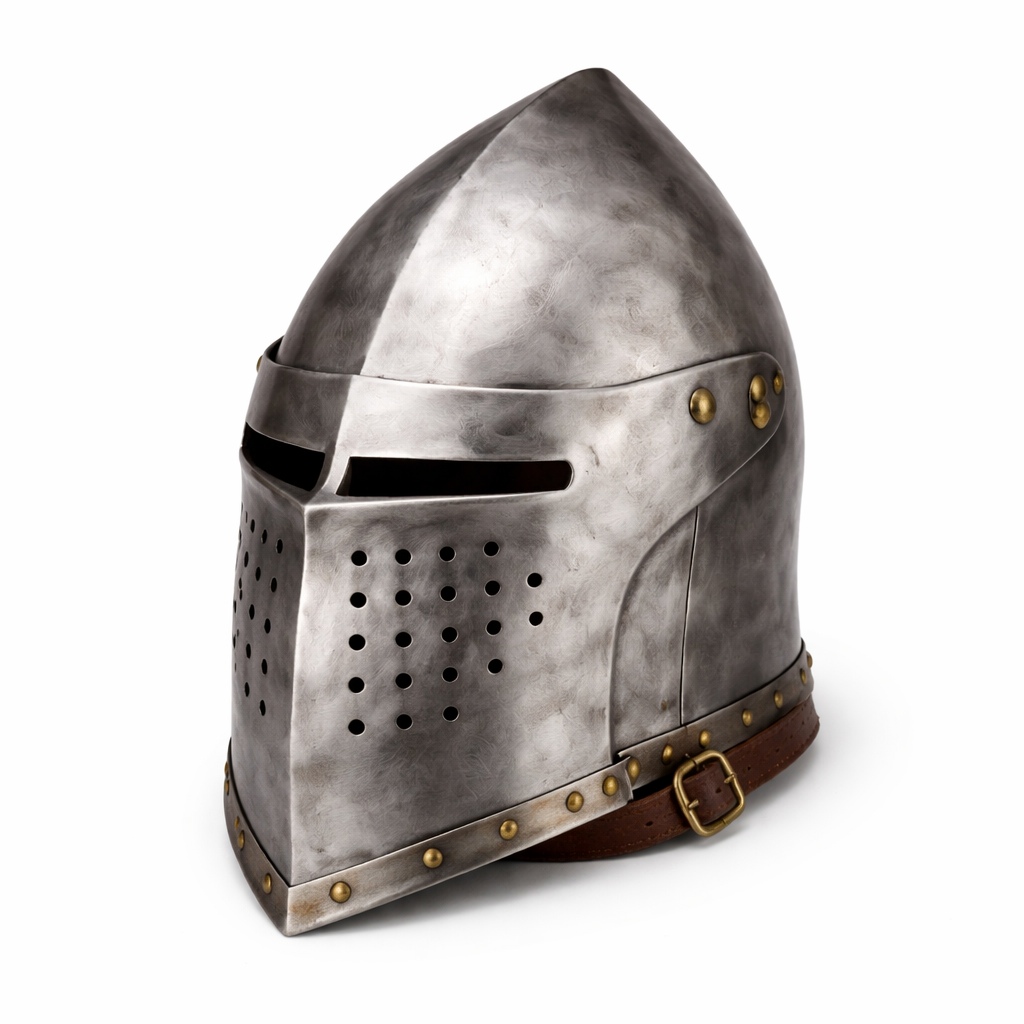
Bascinet with a klappvisor
In the 15th century, the Sallet became popular in German-speaking regions. It was optimized for mounted combat and was striking for its elegant, flowing shape and long neck guard. Since the lower third of the face was not protected by the Sallet, knights wore a separate chin guard known as a bevor. The Sallet is a prime example of the fusion of protection and Late Gothic aesthetics.
.jpg)
Sallet with bellows visor and bevor
In the second half of the 14th century, the Houndsgull (Hundsgugel or dog-faced bascinet) emerged from the visored bascinet. It was streamlined and optimized for lance combat, featuring a pointed visor resembling a dog's snout - a masterpiece of medieval craftsmanship. The name is derived from the visor’s resemblance to a dog's muzzle and the gugel, a hood-like head covering with a shoulder cape that was widely worn in the 14th century.
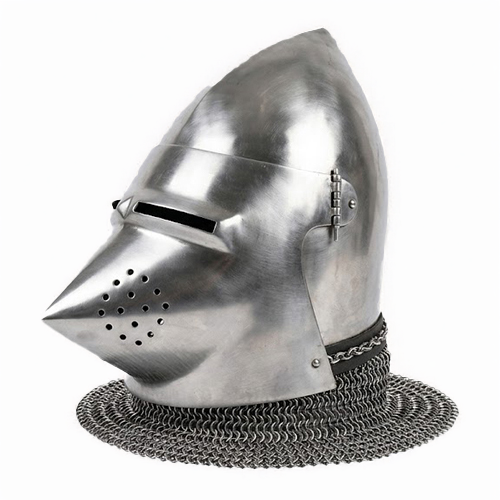
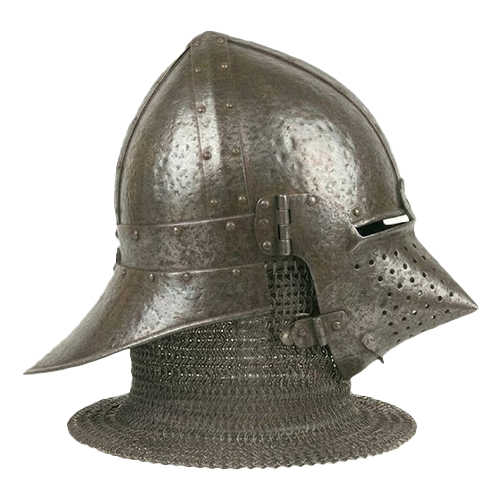
Houndsgull
Decline and Renaissance: From the Battlefield to Symbolism
With the advent of firearms (from the 16th century), the knightly helmet lost its military significance. However, it survived as a symbol of power:
-
Tournament Helmets (16th–17th century): Magnificent, often grotesquely stylized helmets for knightly games.
-
Heraldry: The helmet became a fixed component of coats of arms—depending on rank, adorned with a crown, mantling, or crest.
-
Baroque Staging: Kings and commanders wore helmets during parades to evoke the glorious age of chivalry.
 Deutsch