Gemstone Glossary
Absorption spectrum
When white light passes through a coloured gem, certain colours will be absorbed more than others. The colours least absorbed combine to produce the colour of the gemstone. When viewed through a spectroscope, the absorbed wavelengths produce dark or black absorption bands at certain positions in the spectrum. Many gemstones show characteristic absorption spectra, by which they may be identified.
Achromatic
Greek chroma = colour, a loupe is termed achromatic if the visual field is completely colourless to the very edges. Cheap loupes produce coloured edges through dispersion of light and are unsuitable for grading diamonds.
Adular
Old German synonym for moonstone, named after a location in the Swiss Lepontine Alps, sometimes also called Adula Alps
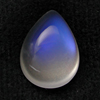
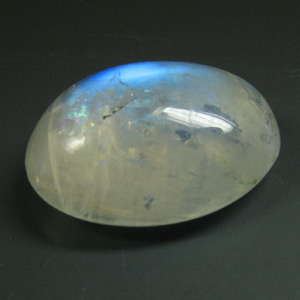
Adularescence
Bluish sheen in moonstone and labradorite
Allochromatic
From Greek chroma = colour and allo = other
The majority of gemstones are colourless if chemically pure and get their colour from impurities; e.g. pure corundum (AL2O3) is colourless, ruby and blue sapphire are coloured by impurites of chromium and titanium and iron respectively.
Opposite of idiochromatic
Anhedral
Poorly formed, external crystal faces not (well) developed, opposite of euhedral
Anisotropic
doubly refractive, opposite of isotropic
Anomalous double refraction
Isotropic (singly refractive) materials such as garnet, synthetic spinel, diamond, amber, glass and opal are often subject to internal strain which causes so-called anomalous double refraction that can easily be detected when the gem is rotated between crossed polarizing filters (polariscope).
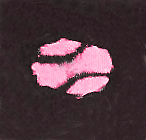
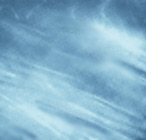
Contrary to anisotropic (doubly refractive) stones, which change from light to dark every 90° upon rotation between crossed polars and to singly refractive stones without internal strain, which remain dark upon rotation, anomalous double refraction causes a patchy, striped or tabby (so called because of the resemblance to the fur of tabby cats) extinction pattern which may move upon rotation but in general has no relation to the orientation of the stone between the crossed polars.
In synthetic spinels of aquamarine colour the internal strain is caused by an excess of alumina. the pattern is distinctly tabby, clearly visible and thus provides a diagnostic, easy to detect feature for identification.
Aplanatic
A lense corrected against spherical and coma (symmetrical) aberration
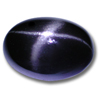
Asterism
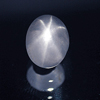
Star-effect caused by reflection of light at needle-shaped inclusions, e.g. rutile in corundum, present in large enough numbers and orientated along crystal axes; can be 4-rayed (garnet, diopside, rose quartz, white moonstone e.a.), 6-rayed (corundum, black moonstone) or, in rare cases 12-rayed (corundum).
Only visible on domed surfaces (cabochons, spheres, beads) under a single light (direct sunlight, spotlight etc.). Under diffuse light (overcast sky, fluorescent tube, ) or in facetted stones no asterism can be observed.
Aventurescence
Metallic glitter caused by reflection of light at included mineral platelets e.g. fuchsite in aventurine quartz and hematite in aventurine feldspar (sunstone).
Baguette
Rectangular stone, mostly step cut

Baguette princess
Rectangular princess cut stone
Birefringence
Brilliant cut
Standard diamond cut. Round cut with 57 or 58 facets: 32 crown (upper part) facets, 24 pavilion (lower part) facets, 1 table facet and sometimes 1 culet at the tip of the stone. The girdle is not counted as a facet.

Briolette
Drop- or pearshaped cut, the surface of the stone is entirely covered with triangular facets; round or oval cross section; very expensive cut with higher than average waste

Bufftop
Stone with facetted pavilion (lower part) and cabochon upper part. The convex upper part produces a loupe effect
Bull´s head
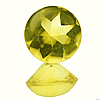
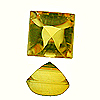
Elongated cut-corner triangel, vaguely resembles a sketched bull´s head
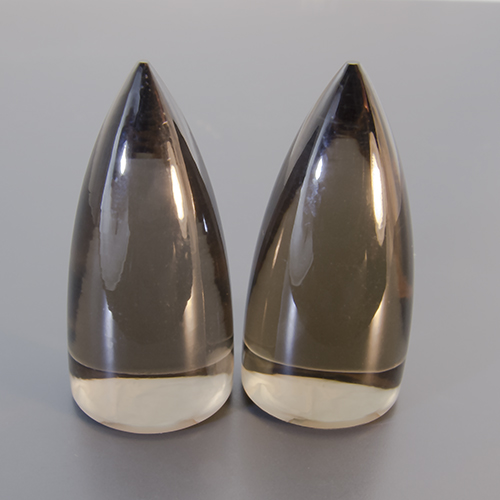
Bullet
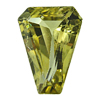
A form of cabochon with an extremely high, sometimes pointed upper part
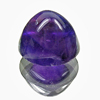

Cabochon
Stone with flat or slightly convex bottom and domed upper part
Calibrated goods
A term used by the gemtrade to denote gemstones cut to standardized shapes and sizes so they can be set in pre-fabricated settings.
Carat
Abbr. ct, plural cts; unit of weight, 1ct = 0.2g
Cat´s eye effect
See chatoyancy
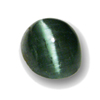
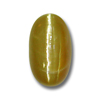
Chatoyancy
Cat´s eye effect caused by reflection of light at needle-shaped inclusions or growth tubes. Only visible in cabochon cuts under a single light source (sunlight, spotlight).
Checkerboard cut
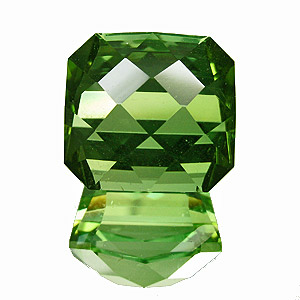
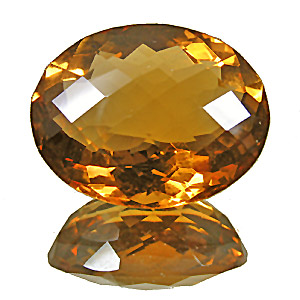
Cut with no table facet, upper part fully covered with lozenge shaped or square facets
Chelsea filter
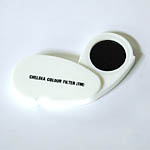
A dichromatic filter which transmits only red and greenish yellow light. Originally developed to distinguish natural emeralds from synthetic ones (early synthetic emeralds glowed strongly red through the filter whereas natural emeralds are inert or show only a moderate reaction). For skilled gemmologists the Chelsea filter provides useful clues (not scientific evidence, mind you!) as to the identity of synthetic blue spinel, irradiated topaz and aquamarine. Deep blue cobalt glass also shows a strong filter reaction.
CIBJO
Confédération Internationale de la Bijouterie, Joaillerie, Orfèvrerie, Perles et Pierres or World Jewellery Confederation. Founded 1926 as BIBOAH, re-named CIBJO in 1961. The task of this council is to record trade practices and nomenclature and to set trade standards accepted worldwide.
Cleavage
Tendency of some gems to split along certain crystal planes
Colour change
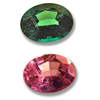
Stones may display different colours in daylight and artificial light. The most prominent colour changing stone is alexandrite, a chrysoberyl variety. The phenomenon also occurs in other gemstones e.g. sapphire and garnet.
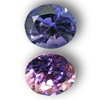
Concave cut
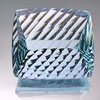
Also "Millenniums Cut", with concave grooves in the pavilion (the part of a gemstone that lies beneath the girdle)
Critical angle
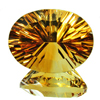
A ray of light, travelling from an optically dense medium, e.g. a gemstone, into a rare medium, e.g. air, is refracted away from the perpendicular. At the critical angle, the ray does not leave the dense medium but travels along the boundary between the two media. Any light, hitting this boundary at an angle greater than the critical angle, cannot leave the dense medium but is totally reflected.
Crown
The part of a gemstone lying above the girdle
Crystal systems
The seven crystal systems and their most prominent representatives are:
- cubic: diamond, garnet, spinel, fluorite
- tetragonal: zircon, skapolite, rutile
- hexagonal: beryl, apatite, jeremejevite, benitoite, sugilite
- trigonal: corundum, tourmaline, quartz, chalcite, rhodochrosite, hematite, smithsonite, phenakite, dioptase
- orthorhombic: olivine (peridot), chrysoberyl, topaz, cordierite (iolite), zoisite (tanzanite), andalusite, danburite, prehnite, enstatite, kornerupine
- monoklin: jadeite, nephrite, spodumen (kunzite, hiddenite), malachite, clinohumite, howlite, brazilianite, charoite, diopside, orthoklas, staurolite
- triclinic: turquoise, kyanite, labradorite, mikrokline, oilgoklase, plagioklase, bytwonite, rhodonite, sapphirine
Cubic zirconia
"Cubic stabilized zirconium oxide", often abbreviated to "CZ", very popular diamond imitation. Has nothing in common with natural zircon except for the element of zirconium.
Culet
The facet produced by cutting off the tip of the stone to prevent damage, old style, usually not found in modern cuts
Cushion
Cushion shaped cut

Density
See specific gravity
Diasterism
When the star is best visible in transmitted light, example: star rose quartz
See also asterism
Opposite of epiasterism
Dichroism
Bi-colouredness, a form of pleochroism
Dichroscope
Optical instrument for the separation of the different colours of pleochroic gems. Makes use of the fact that doubly refractive stones split light into two rays polarized at right angles to each other
Dispersion
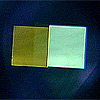
The fire of gemstones caused by the splitting of light into its spectral colours upon reflection at two surfaces inclined to each other. Very prominent in demantoid garnet, diamond, white zirkon e.a.
Domed table
The table facet of seal stones is sometimes very slightly domed
Double refraction
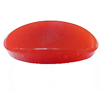
Doubly refractive minerals split lightrays in two upon entry, opposite: single refraction
Doublet
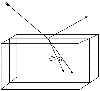
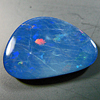
A composite stone consisting of two parts; common in opals to make use of opal slices of high quality that would otherwise be too thin. Sometimes used to defraud e.g. garnet/blue glass doublets or synth. blue sapphire/colourless sapphire doublets may imitate natural blue sapphire. Difficult to detect in closed settings (gas bubbles in cement layer)
Elbaite
Member of the tourmaline group, forms series with liddicoatite, schorl and dravite; first found 1913 on the Italian isle of Elba, hence the name. Elbaites occur in many colours. Most famous and sought-after are the blue, purplish-blue and green copper-bearing elbaites from Paraïba, Brazil.
The discovery of copper-bearing tourmalines in Nigeria and Mocambique sparked a heated debate whether these new stones may also be termed Paraïba tourmalines.
We of the Vienna Gem Center hold the opinion that only elbaites from Paraïba, Brazil, should be marketed as Paraïba tourmalines. In accordance with leading international authorithies we call copper-bearing elbaites from other localities or stones with uncertain origin "Paraïba-type tourmalines".
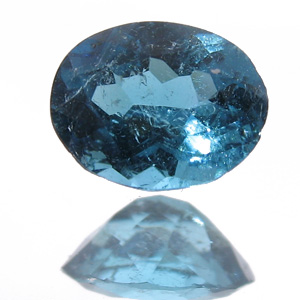
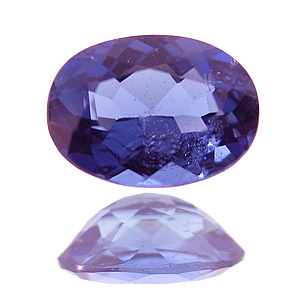
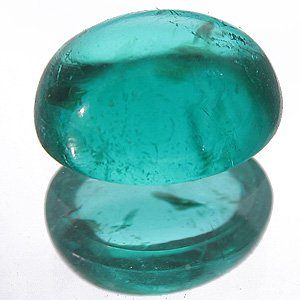
paraïba tourmalines, brazil
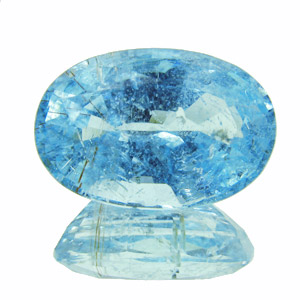
paraïba-type tourmaline, mocambique
Emerald cut
Octagonal step cut, conventional cut for emeralds to avoid any damageable sharp edges

Epiasterism
When the star is best visible in reflected light, example: star sapphire
See also asterism
Opposite of diasterism
Euhedral
Well-formed, external crystal faces well developed, opposite of anhedral
Eyeclean
When a trained expert cannot see any inclusions with the unaided eye
Fancy cut
A non-standardized cut, often follows the outlines of the rough stone to achieve maximum yield
Fluorescence
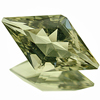
In gemmology fluorescence denotes the optical behaviour of gemstones under UV light, quite often this is a diagnostic feature in gemstone identification
Free form
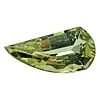
Asymmetrical fancy cut, usually follows the outlines of the rough stone to achieve maximum yield
Gemmology
American English: gemology; the science of gemstones, part of mineralogy with the handicap of having to identify gemstones non-destructively
Geneva ruby
Because of their high value, Rubies are amongst the gems that are synthesized and imitated most often. The earliest synthetic gems, the so-called "Geneva Rubies", were produced as early as 1885 and sold as genuine Rubies by a Geneva dealer.
In 1886 Paris jewellers gave the Sorbonne University some Geneva Rubies for examination. A Professor Friedel found them to possess the same density, hardness and optical properties as natural rubies. However, under magnification Friedel found numerous gas bubbles typical for glass and rightly concluded that the rubies were produced by some kind of high-temperature fusion process.
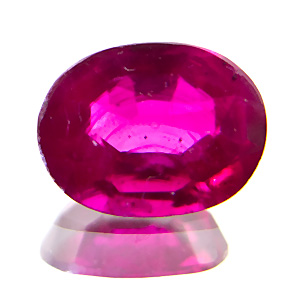
After it was decreed that these rubies were not to be sold as natural, claims were made that the stones were indeed produced by a flame-fusion process but that the starting material was fragments that were left over during the cutting of natural rubies.
For the next twenty years Geneva Rubies were being sold as "Reconstructed Rubies" at prices of $25 to $40 p.ct. until they were finally pushed off-market by the far superior Verneuil synthetics in 1904.
Girdle
Junction of upper and lower part of a gem, sometimes divided into many small facets. Should always be polished as unpolished girdles distract from brilliance. Thick girdles mean excess weight and are difficult to set, razor-sharp girdles are likely to chip during setting
Glass
There are glass imitations of almost any kind of gemstones. With some practice and a good loupe identification poses no big problem, though.
The most important diagnostic features are:
- conchoidal fracture (beware: also seen in quartzes and other gems)
- somewhat blunt facet edges (with signs of wear in older "stones")
- round gas bubbles
- often with flowmarks
With larger specimens a simple test of thermal conductivity can be performed to distinguish glass from crystalline material:
Let the stone in question rest next to a definitely crystalline material for a few minutes so that both can assume the same temperature.
Attention: the test only works with crystalline material. It does not work with e.g. Opal, Coral, Amber, Pearls, Ivory and the like. The stone to be tested as well as the reference stone must be of a minimum size, say about 10mm. Small stones assume body temperature far too quickly during testing.
Take the stones up, one after the other, quickly and touch a heat-sensitive spot like lips, eyelid or earlobe. It is imperative to do this as quickly as possible to prevent the stones from assuming body temperature.
Glass feels distinctly warmer than crystal. The difference is quite pronounced.
If you ask yourself whether there is a difference then either there is none (as stated above, if there is a difference, it´s strong), which means that the speciemn is not glass, or the specimens did not have enough time to assume the same temperature.
The test also works with stones in settings, as long as they are large enough to ensure that you do not touch the metal, which always feels cold.
Glyptic
The art or process of carving or engraving gemstones
Habachtal
A valley in the Austrian Alps with a famous emerald mine that reportedly has been known since bronce age. The mine is probably the source of most emeralds used in European jewellery until the discovery of the Indian and later the South American deposits. The Roman emperor Nero is said to have possessed a monocle cut from a Habachtal emerald. The largest known specimen weighs 42cts and is kept in the London tower.
Habit
The typical crystal appearance of a mineral; e.g. tabular hexagonal, columnar prismatic etc.
Idiochromatic
Self-coloured, fromm greek idio = peculiar, one´s own and chroma = colour
Gemstones in which the colouring elements are constituent parts of the chemical formula. Examples: malachite (CuCO3) and dioptase (H2CuSiO4) are coloured green by copper, rhodonite (MnSiO3) gets its rose-red colour from manganese.
Opposite of allochromatic
Imitations
Natural or arftificial substances that imitate natural gemstones e.g. glas or plastics. Contrary to synthetic gems imitations do not have the same physical and optical properties as their natural counterparts.
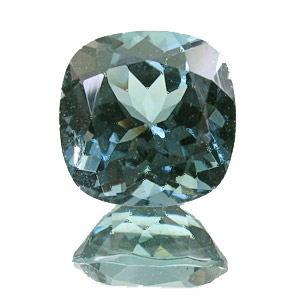
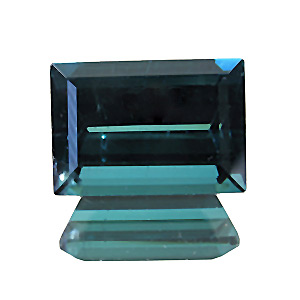
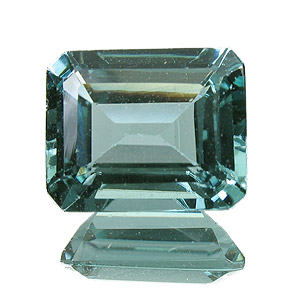
Indigolite
Also: indicolite, tradename for blue tourmaline, usually, but not always, elbaite
Isomorphous replacement
From Greek ἴσος ísos equal and μορφή morphé form, shape
When one element in a mineral can be replaced by one or more other elements of similar chemical nature and the same or very similar ionic radius, without markedly changing the crystal structure.
However, the varying chemical compositions of the species belonging to one isomorphous series usually cause wide variations in such physical properties as density and refractive index.
Instead of a fixed chemical formula, a structural formula is given.
Prominent examples are the Garnet, Tourmaline and Peridot groups.
A3B2[CO4]3, the basic structural formula is the same for all Garnets. A, B and C being definite places in the crystal lattice, which can be taken by these elements:
aluminium, calcium, chromium, iron, magnesium, oxygen, silicium, titanium, vanadium, manganese and various trace elements.
Isotropic
Singly refractive, opposite: anisotropic
Jardin
French for garden, euphemistically used term to describe the inclusions of emeralds.
Clean emeralds are extremely rare. Thus inclusions in emeralds are accepted much more than in most other gemstones.
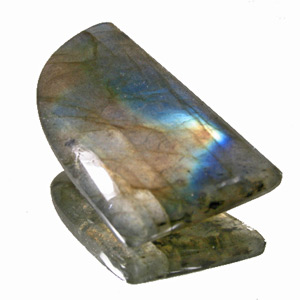
Labradorescence
The play of colour seen in labradorite feldspar.
The phenomenon is caused by interference of very slightly out-of-phase light due to reflection from thin surfaces. Comparable to the colours seen on a film of oil on a water puddle.
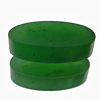
Layered stone
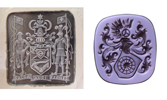
Consisting of two differently coloured layers of agate. As naturally layered stones are extremely rared most layered stones are dyed. Used as seal stones for gemstone engravings
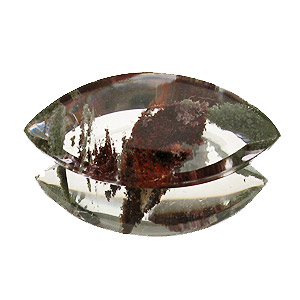
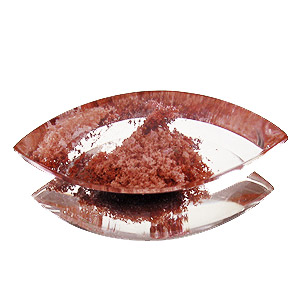
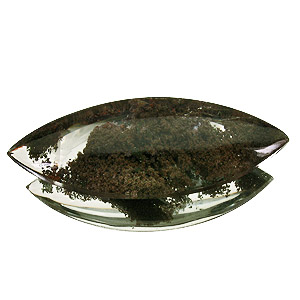
Lodolite
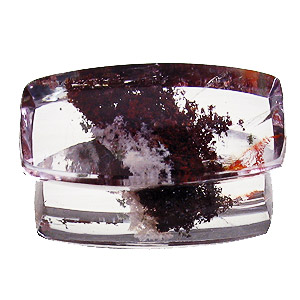
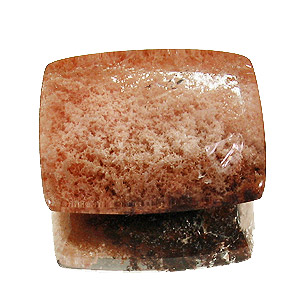
Lodolite is an unofficial tradename for quartzes with mineral inclusions belonging to the chlorite group. Depending on the type of chlorite the very attractive inclusions appear in various colours e.g. green, brown, orange, white, pink, purple etc.
The literal translation is "mud stone" (spanish lodo = mud).
We are not sure whether this name refers to the mining location in Minas Gerais, Brazil, or to the visual appearance of the inclusions.
Loupe clean
A term, originally only used for diamonds, only. A diamond is called loupe clean when a trained expert cannot detect any inclusions with the help of an aplanatic, achromatic 10x loupe. Diamonds with inclusions of a size of more than 5 microns must not be called loupe clean (including outer features e.g. "frazzles" at the girdle).
Marquise cut
Also navette cut, reportedly named after the Marquise de Pompadour

Millenniums cut
See concave cut
Mixed cut
Upper and lower part of the stone are cut in different styles e.g. upper part brilliant or scissors cut, lower part step cut or 3-4 rows of rectangular facets
Mohs hardness
The degree of hardness of minerals according to the scale of hardness published in 1822 by the German mineralogist Friedrich Mohs.
- talc
- gypsum
- calcite
- fluorspar
- apatite
- orthoclase feldspar
- quartz
- topaz
- corundum
- diamond
Navette cut
See marquise cut
Opalescence
Denotes the orange colour that can be seen in opals when viewed in transmitted light. Do not confuse with play of colour.
opaque
Not transmitting any light
Pavilion
Part of a gemstone lying benath the girdle
Pendeloque
Also: pear. drop shaped stone (with crown,pavilion and table facet); do not confuse with briolette or teardrop.

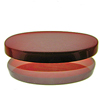
Plate
Stone plate without girdle facets. Mostly glued into settings to produce planar surfaces
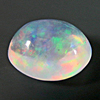
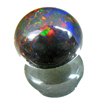
Play of colour
The various colours of opal when viewed in reflected light, not to be confused with opalescence
Pleochroism
Multi-colouredness; an optical phenomenon of some but not all doubly refractive stones. Caused by the splitting of light into two rays. These rays take different paths through the gemstone, are absorbed differently and thus of different colours. The human eye usually perceives a mixed colour. Only in very strongly pleochroic gems like e.g. tourmaline, the different colours can be observed by the unaided eye (see dichroscope) when viewing the stone from different angles.
Portuguese cut
Cut with 161 facets in it´s classical form. Because of the high number of facets the portuguese cut is mostly used with large stones having a high pavilion (lower part)
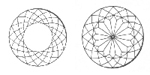
Princess cut
Originally developed for diamond baguettes and squares; a combination of a modified step cut and brilliant cut; very lively

Profile cut
Pentagonal cut that, when viewed from the top, resembles the side view of a brilliant cut diamond
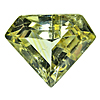
Radiant cut
Cut for octagonal stones similar to the emerald cut in outline but with a facet alignement similar to the brilliant cut, developed by the american diamond cutter Henry Grossbard.

Refractive index
Abbr. R.I., important feature in gemstone identification, the sine-relation of incident ray and refracted ray (refracted rays in doubly refractive materials).
Refractometer
Optical instrument for the measurement of the refractive index
Rose cut
Round, facetted stone without pavilion and 3 to 48 crown (upper part) facets
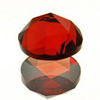
Schiller
See adularescence
Scissors cut
Mostly found in emerald cut stones, shows crossed, scissor-like crown facets. Often encountered in cheap (Verneuil) synthetics.


Scratch test
To determine the Mohs hardness of minerals, hardly used in gemmology which has to work non-destructively
Seal stone
Mostly oval or cushion shaped stone with slightly bevelled edge, used for engravings (mongrams, coats of arms etc.). Table can be flat or very slightly domed.
Semi-translucent
Transmitting some light only at thin edges
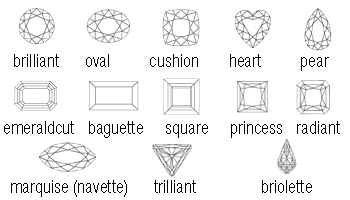
Shapes of cut
Most popular shapes:
Single refraction
Contrary to doubly refractive materials, singly refractive minerals do not split lightrays in two upon entry
Specific gravity
Density; the weight of a substance compared to the weight of an equal volume of water at 4°C
Square
A square shaped stone, either step- or princess cut

Star effect
See asterism
Step cut
Style of cutting rectangular or octagonal stones with parallel facets arranged like steps of a staircase. The classic octagonal emerald cut is a step cut.
Synthetic gems
Mostly have the same chemical, physical and optical properties as their natural counterparts. As an example for an exception: synthetic spinels have a slightly higher refractive index than natural spinels.
Table facet
Largest facet on the crown of a gemstone
Teardrop
Drop- or pearshaped stone with smooth surface; round or oval cross section
Total reflection
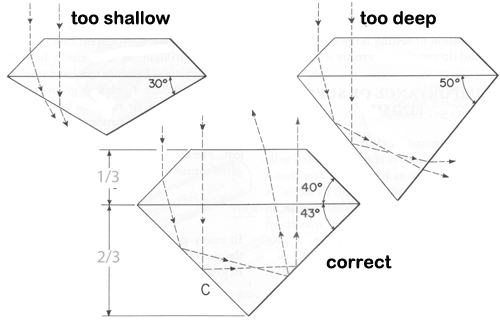
Aray of light, travelling from an optically dense medium (gemstone) into a rare medium (air) cannot leave the dense medium, if it hits the boundary between the two media at an angle greater than the critical angle.
In correctly cut gems this phenomenon causes light, which enters the gem through the crown to leave the stone through the crown, as well. too deep or too shallow pavilions cause severe loss of brilliance. Furthermore, a shallow pavilion produces an uncomely area of low reflection, the so-called "fish eye" or "window".
Translucent
transmitting some light
Trapiche emerald
A special form of emerald; the spanish word "trapiche" denotes the cogwheel with which sugarcane is crushed. In trapiche emerald inclusions of coal-black shale form a pattern resembling the spokes of a wheel. There are at least four types of trapiche emerald:
-
a black-bordered core from which black spokes emanate
-
a solid black core with black spokes
-
coreless with 6 spokes meeting in the center
-
core and spokes consisting of emerald with sandstone in between (reverse trapiche)
The phenomenon was also observed in rubies from myanmar (burma), India and vietnam
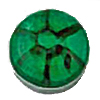
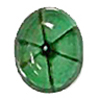
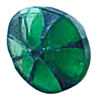
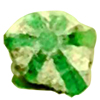
Trapiche emeralds from Colombia
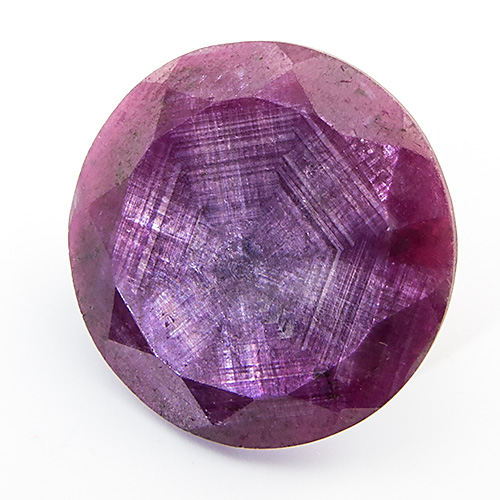
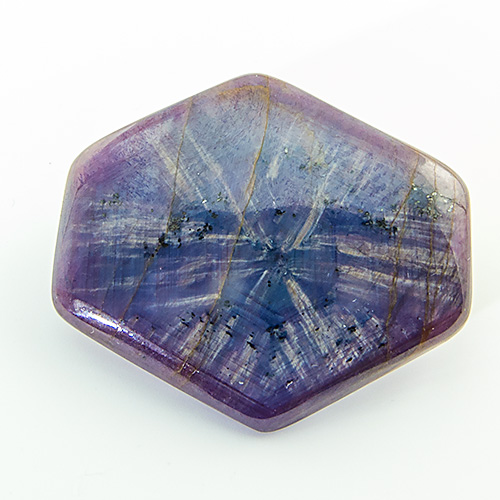
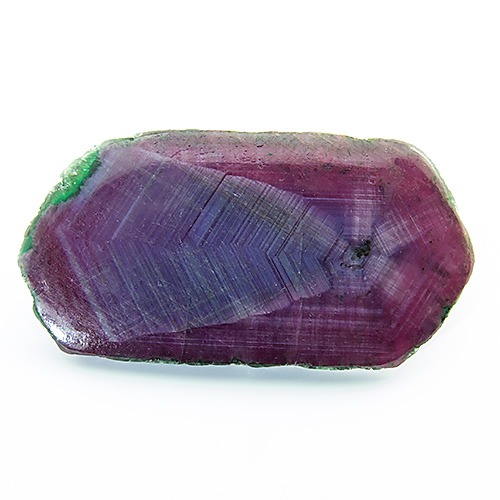
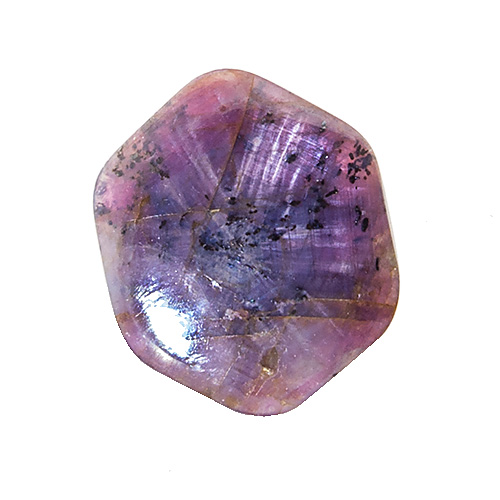
Trapiche rubies from South india
Trichroism
Tri-colouredness; a form of pleochroism
Trilliant cut
Also trillion, a triangular cut with outwardly curved sides. Has more or less replaced the classic straight-sided triangel as trilliants are much less susceptible to damage during cutting and setting.

Ttriplet
Composite stone consisting of three parts. Most common in opal when a paper-thin layer of opal is glued onto a base of onyx or plastic and covered with a glass- or sometimes rock crystal top
Tumbled
Cheap gemstones are not polished by hand individually. Instead, they are tumble-polished in large quantities in rotating or vibrating tumbling machines which results in irregularly shaped "pebbles".
Verneuil, Auguste
1856-1913, French chemist who in 1902 published the flame-fusion process for the mass-production of cheap synthetic gemstones. Up to today large quantities of synthetic gems, mostly rubies, sapphires and spinels, are produced by this method. Contrary to much more expensive synthetic gems produced by other methods, Verneuil stones in most cases are relatively easy to identify for gem experts.
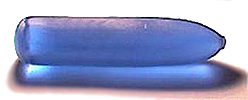
typically shaped "Verneuil-boule"
Zoning
Also colour zoning; growth-related patchy or striated colour distribution within a gemstone. Common in quartz and sapphire; no longer a sure sign of genuineness as some synthetic gemstones may also display colour zoning
 Deutsch