Aventurine Quartz
A variety of quartz with numerous inclusions of fuchsite, a muskovite mica coloured green by chromium, hematite (red, brownish red), or crocidolite (blue asbestos).
The glittering effect caused by the inclusions is called aventurescence.
Aventurine Quartz shop
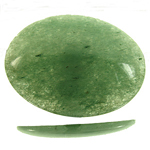
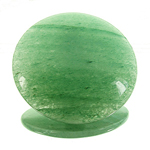
Origin of name: The name aventurine derives from the Italian "a ventura" meaning "by chance". This is an allusion to the lucky discovery of aventurine glass or goldstone at some point in the 18th century. Although it was known first, goldstone is now a common imitation of aventurine and sunstone.
Source: Wikipedia
Synonyms and trade names: quite often the material is called aventurine only. Because of the existence of a similar looking aventurine feldspar the correct term aventurine quartz should be used.
The green variety is frequently and wrongly offered as Indian jade.
Can be confused with: green aventurine auartz might be confused with the jade minerals nephrite and jadeite.
Red aventurine quartz can be confused with the man-made glass called goldstone.
Glass with flaky inclusions also comes in blue and, much rarer, green colour.
However, all these glasses have a very characteristic look and the similarity to the real thing is quite superficial. Anybody who has ever seen genuine aventurine quartz or feldspar will not fall for the deceit.
Localities: the commercially most important source is India. Other localities are Russia, South Africa and the USA. There are several smaller deposits in Europe, e.g. in the Black Forest in Germany and near Mariazell in Austria.
Handling: like all quartzes aventurine quartz is sensitive to hydrofluoric acid only. Due to the numerous inclusions it is somewhat heat-sensitive.
Worth knowing: the process to produce goldstone was discovered on Murano, the glass-makers island near Venice, by the Miotto family in the 17th century. The Miottos were granted exclusive production rights by the Doge of Venice.
Other folklore says it was discovered by an undisclosed monastic order.
Source: Wikipedia
Aventurine Quartz shop
 Deutsch