Aragonite
Principal member of the aragonite group, the other members being cerrusite, strontianite and whitherite.
Aragonite shop
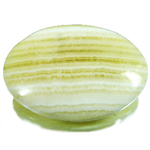
Origin of name: named in 1797 after the type locality Molina de Aràgon, Spain.
Synonyms and trade names: iglite, igloite, chimborazite, conchite and many more
Can be confused with: calcite, baryte, gypsum. Banded varieties can easily be confused with quartz (agate, chalcedony)
Localities: very common on all continents including Antarctica. Mindat.org lists 2426 localities
Handling: aragonite is soft and brittle, has good cleavage and is quite sensitive to acid. To improve these properties aragonite is often stabilized with synthetic resins. Nonetheless great care must be taken when aragonite is used in jewellery.
Do not clean ultrasonically. Keep away from galvanic baths and all acids and brines.
Because of its low hardness aragonite scratches easily, so be gentle on the polishing mop.
Worth knowing: after calcite aragonite is the second most common calcium carbonate. It is the main constituent of mother of pearl and coral. The concretions in your water pipes also are aragonite.
Aragonite shop
 Deutsch