News from India
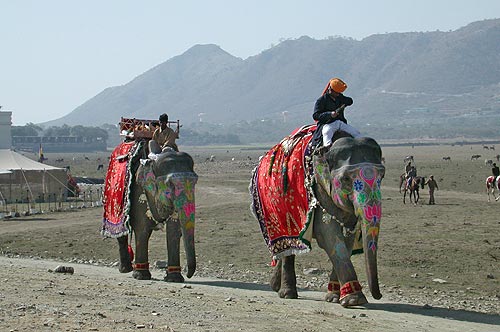
The indian gem market is alive as ever. Thomas Pfneisl was on a buying mission for the Vienna Gem Center and reports about spectacular new finds, enjoyable as well as deplorable price changes and trends in the international gem trade.
Due to the friendly development of the american market the lackluster attitude amongst indian gem traders and lapidaries is a thing of the past. Not only growing demand in the USA has spirits flying high, there have been some truly exciting new discoveries in India and Africa as well.
Perhaps the most interesting new find is indian alexandrite. Thats right, there is alexandrite in India! The new mine is located in the state of Andhra Pradesh and was discovered only about two years ago. Unfortunately production is so little that even though we set our brokers to high alert immediately, so far we could only secure one or two high quality stones per year.
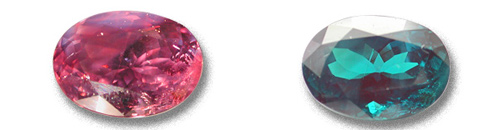
Indian alexandrites are characterized by outstandingly beautiful daylight colour, very high clarity and good to excellent colour change. To make things even better they come - despite the extreme rarity - for a significantly lower price than comparable stones from russian, brazilian or african sources. Wer hope that production will increase and that procurement of top quality alexandrites will become easier...
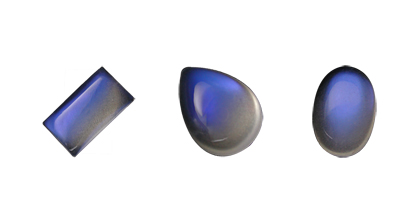
There are more good news: some time ago fully to highly transparent labradorite with fine blue shiller was discovered in Tanzania. A lot of the rough material found its way to Jaipurs lapidary workshops. The stones closely resemble Sri Lankan blue moonstone of the highest grade and fetch unusually high prices, for labradorite, that is. Even so they are dramatically cheaper than blue moonstone. The largest stone I encountered (and bought) weighs a whopping 15cts with the majority ranging from 3 to 5cts.
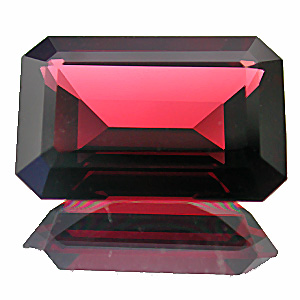
The garnet market has been livened up by two new discoveries, as well. After a long time there are brightly coloured, large rhodolites to be had for comparatively little money. Nobody would or could name the location (Orissa?) but being dedicated garnet specialists we were glad to learn that supply of these beautiful stones seems to be secure for the time being and that prices have stabilized at a pleasingly low level.
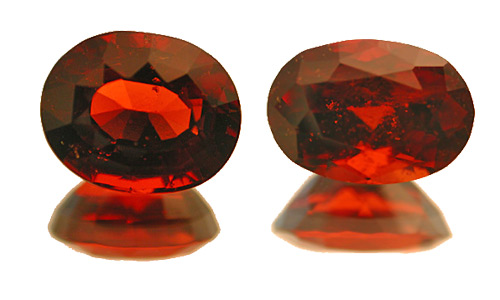
Avid garnet collectors will be pleased to learn that obviously a new hessonite location was discovered. As with the rhodolites above nobody was willing or able to pinpoint the location but I do have a hunch it might be in Sri Lanka. The colour is so unusual for hessonite that a spontaneous "Impossible! Thats no hessonite colour" broke from my lips which seriously displeased my broker. How could I dare to question his expertise! He did, however, warm up to the fact that after seeing the unmistakable "oily" appearance of hessonite through my loupe I decided to buy all four stones.
The situation on the amethyst and citrine markets might at the moment best be described as "marbled". The supply of citrines is anything but good and I was not amused with current market prices, particularly for large single stones. What further aggravated me is the ever growing market penetration with (russian?) synthetics. Buyers beware!
It seems to us that prices for fine large amethysts will increase further. We will keep you informed...
 Deutsch